

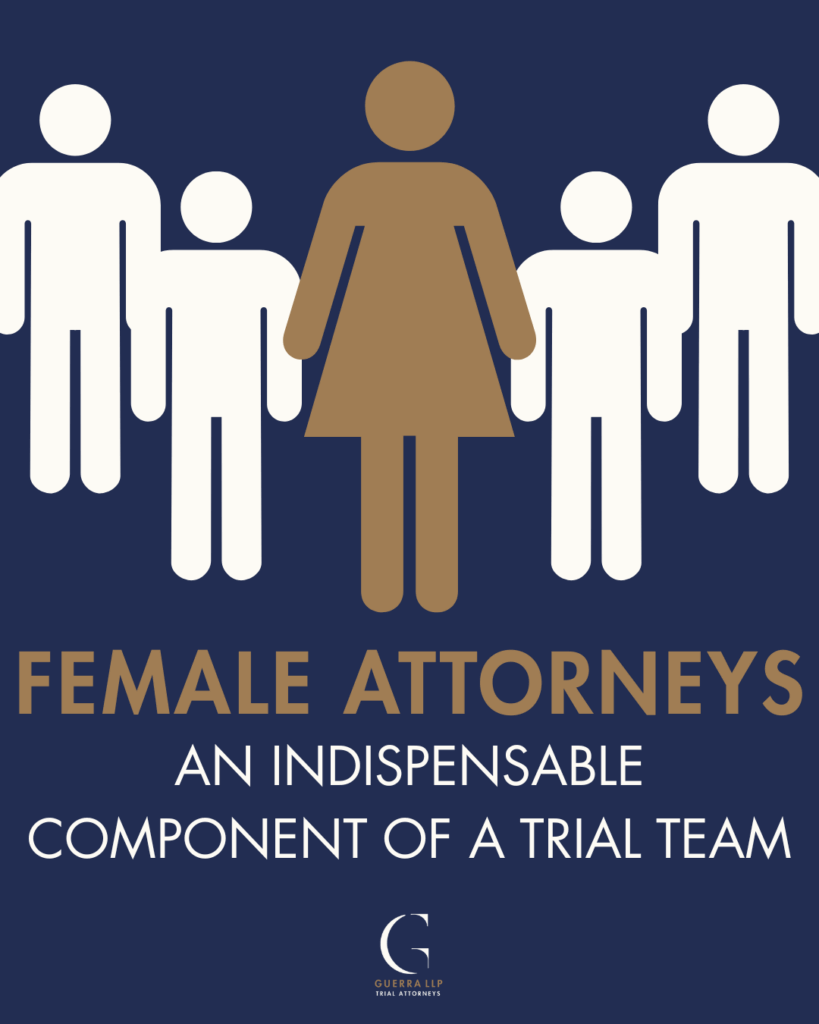
A seat in a courtroom is like a spot at the dinner table during heated discourse—at either head sits one’s mother and father, just as in the courtroom, where two attorneys take their positions before the jury. One delivers the cold, hard facts; the other weaves the human narrative. Together, they transform loose arguments into conviction. Just as a child looks to both parents for balance, a jury finds truth in the harmony of voices—logic and emotion working in tandem to shape justice.
The art and science of law, particularly trial advocacy, boils down to basic human connection—the ability to compose a compelling message while threading in facts and evidence. Success is measured in one final verdict. With such high stakes, how do law firms maximize their talent in the courtroom? The answer today is gender diversity.
The equal presence of men and women in the professional world has always been skewed—by design. Women have spent generations playing “catch-up” while men continue to excel in a system built to serve them. But in the courtroom, this dynamic shifts. Women aren’t just welcomed; they’re indispensable. Trial law demands more than just a man.
Human Perception Entering the Courtroom
Depending on the scale of a case, 2–6 attorneys typically take the floor, working in sync—delivering arguments, questioning witnesses, and constructing a case designed to persuade a jury of randomly selected individuals. And that’s the keyword: random. A jury pulls citizens from all walks of life to hear a case and determine where justice lies—what could be more crucial than maximizing juror perception?
A jury trial is not just a battle of logic—it’s a battle for human perception. Research in psychology and neuroscience confirms that jurors don’t make decisions based on facts alone; they respond to how those facts are presented and by whom. Studies show that while male attorneys are often perceived as authoritative, female attorneys tend to be rated as more trustworthy³. That’s not just a superficial observation—it has direct consequences in trial outcomes⁴. According to Scott Westfahl’s 2015 study with Harvard University, “Listening is a critical skill for any lawyer, yet many law firm competency models still don’t include it. Coincidentally or not, it happens to be a skill at which women often excel relative to their male peers.” This reinstates the idea that women’s natural characteristics allow them to better connect with clients and do so on a level that transcends the basic exchange of information¹.
The Impact of Female Attorneys
During a trial, attorneys present their arguments for their client to the jury to state why their client deserves to “win” foregoing as much legalese as possible. Jurors are often more likely to connect emotionally with damages when explained by a female attorney². Women’s voices are
statistically more persuasive in conveying empathy and the human impact of a case, particularly in personal injury and wrongful death trials.
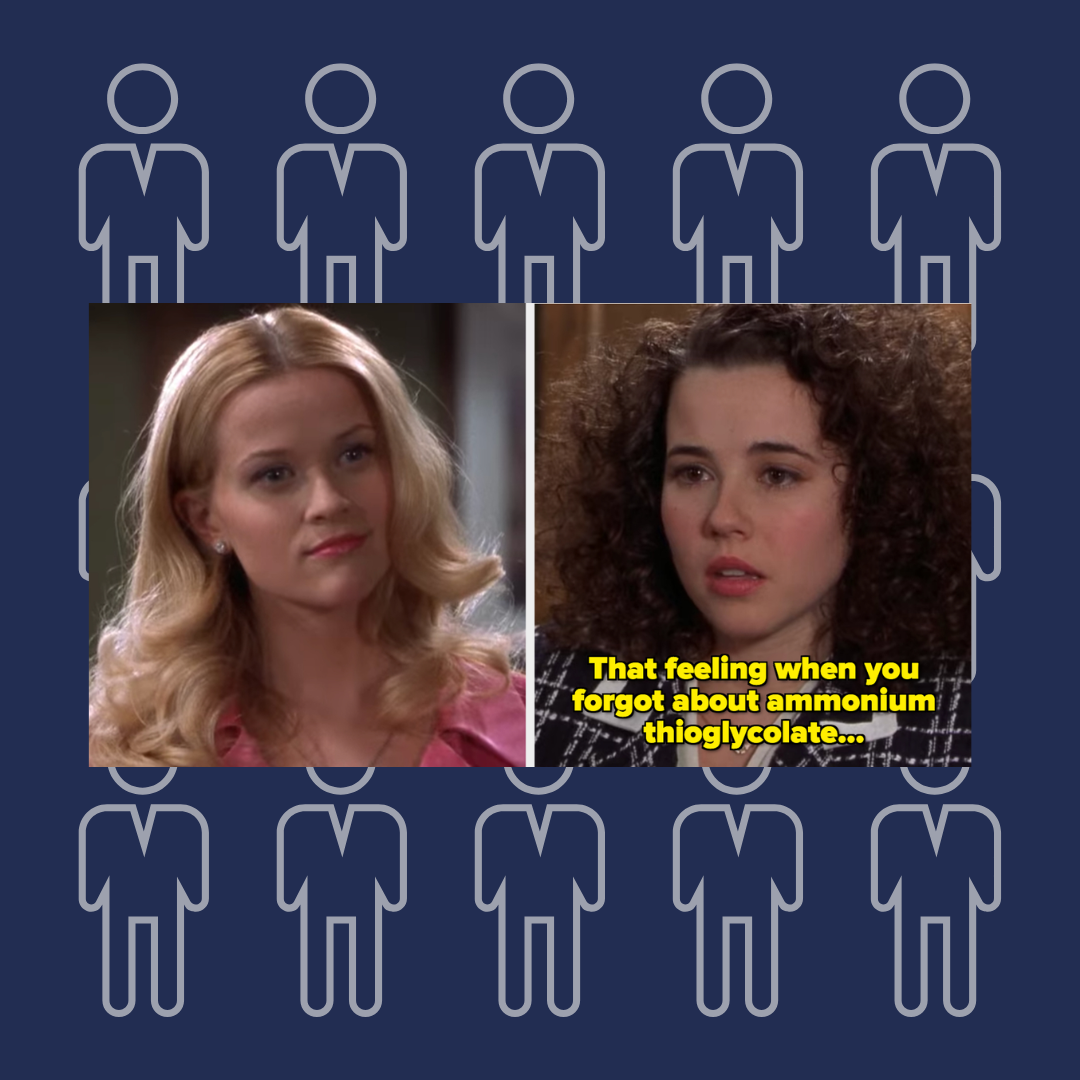
Women also have a natural ability to make others feel safe—an attribute that is key in law. Mainstream cinema has nodded to this natural ability in many movies. For example, in Legally Blonde, Elle Woods is the attorney who ultimately receives the crucial alibi from Brooke Wyndham, an alibi the defendant refused to share with the male attorneys, especially the toxic Professor Callahan. While this scene comes from a popular “chick-flick,” it highlights a true and relevant theme: in many cases, it’s the female attorney who makes the difference in delivering justice. Without Elle Woods, Wyndham’s chance at justice might have been lost.
Although Hollywood depictions are a far cry from what actually occurs in the courtroom, movies like this provide potential future jurors with a minor insight of what a court case might be like. Attorneys can also prepare their arguments to reflect Hollywood’s depiction of the courtroom in order to help captivate and relate to their audience.
Balancing Legal Strategy
Men are more likely to dominate cross-examinations, but female attorneys excel in witness rapport, reducing resistance and eliciting more candid testimony⁴. A trial team without this balance is operating at a disadvantage—it’s not a question of fairness, but of strategy. In another first literary and then Hollywood example, Harper Lee’s To Kill a Mockingbird, Atticus Finch’s cross-examination of Mayella Ewell is a masterclass in legal strategy. Rather than relying on Mayella’s trust, Atticus uses calculated, deliberate questioning to expose the inconsistencies in Mayella’s testimony and the flaws in the case against Tom Robinson. His brilliance lies not only in his methodical approach but in the way he tactically corners Mayella with his utilization of impeachment in Mayella’s story as well as demonstrative evidence when he asks Robinson to catch the glass with his left hand. By carefully asking her questions that she cannot easily answer, Atticus highlights the lack of evidence and suggests that her accusations are based on her own guilt and shame. For example, he subtly implies that it was Mayella’s father, not Tom Robinson, who may have been the one to hurt her. Atticus never raises his voice, yet he skillfully dismantles Mayella’s story, forcing her into a position where her credibility starts to crumble. His strategic cross-examination shows the power of using logic and strategy to corner a witness, all while maintaining the moral high ground.
Men and women alike have natural—biological—tendencies to better resonate with members of their same sex. This instinct has grown roots in misogyny and sexism in many societies, where historical gender roles have reinforced division rather than unity². While these natural tendencies can foster camaraderie and understanding, they have also contributed to systemic biases, limiting opportunities and giving power to stereotypes. Over time, this has shaped workplace dynamics and leadership structures, often to the detriment of gender equality. Where women lie in this dynamic has, for centuries, been below men—where trial law comes into play, this unbalanced tier system is unwelcome.
The Advantages of Gender Diversity
Each gender possesses its own strengths and weaknesses—unique to its biology and catered to societal expectations. Both positive and negative, society’s impact on each gender often
influences traits deeply rooted within the respective sexes. Men, classified as domineering and both mentally and physically stronger, possess traits such as assertiveness, decisiveness, and resilience against opposition, which shape men as a key component to a successful trial team. Without the inherent credibility associated with the male sex, teams may lose their initial validity. Apart from first impressions, the male mental complex establishes a vital “toughness” in a courtroom—that without a case could crumble.
Women, on the other hand, are often associated with emotional intelligence, intuition, and strong communication skills—qualities that extend far beyond just maternal instincts⁵. Their ability to spot underlying motives and approach difficult situations with both empathy and logic makes them indispensable in a courtroom, especially when assessing witness credibility, juror perception, and even the broader implications of a case. Women have a human touch that simply cannot be found in the average male attorney. Fear is translated into motivation, tears are a signal to explore other angles, and love is passion. There are no bounds, no emotions untapped in the mind of a female attorney.
If your firm stacks its team with only male attorneys, you’re playing with one hand tied behind your back. Jury psychology is not a guessing game—it’s a science. Research on implicit bias reveals that jurors tend to trust and relate to those who reflect their own demographics²⁶. Women make up at least half of jury pools, yet all-male trial teams expect to sway them without a single representative of their perspective? That’s not just outdated; it’s ineffective.
Imagine a business that refuses to market to half its consumers. Or a football team that builds its entire strategy around offense but ignores defense. That’s exactly what an all-male trial team is doing—operating with a blind spot that weakens their ability to persuade, connect, and ultimately win cases.
Bringing Gender Diversity to the Courtroom
The numbers don’t lie. A study on jury decision-making found that diverse legal teams are more effective at shaping verdicts, particularly in cases requiring emotional appeal⁶. Contrary to Aristotle’s claim that “Law is reason free from passion,” passion—specifically emotion—contributes heavily to a successful case. A trial team without passion lacks human connectivity, and this connection can be crucial in securing a favorable outcome. Firms with gender-balanced trial teams report higher success rates, emphasizing that emotional intelligence and diverse perspectives are key factors in courtroom effectiveness.
When it comes to questioning witnesses/defendants, studies suggest that witnesses are more likely to cooperate—and less likely to become combative—when questioned by female attorneys³⁴. Women’s ability to control their temper and remain poised in high-stress environments is one of their most vital assets in the courtroom. Their professional demeanor establishes respect and credibility, which judges and juries notice. In contrast, male attorneys sometimes struggle with maintaining composure, with emotions, particularly aggression, potentially leading to costly mistakes. A diverse trial team—where different emotional strengths come into play—helps prevent the temper-driven errors that can break a case.
Ultimately, the success of a trial team isn’t just about who has the best legal knowledge—it’s about the balance of emotion and reason, and how a diverse group can channel both effectively.
While the foundational principle of law may be that facts are the driving force behind justice, that does not mean emotions have no place in the courtroom. In fact, the beauty of law lies in its ability to present facts and translate them into a language that reveals humanity. If cases were simply a recitation of facts, there would be no need for a jury. The human element—emotion—helps give those facts meaning, context, and background—that without it, cases might as well be tried with Jane Doe’s instead of real people with real stories because it’s the personal touch, the emotional weight, that ultimately connects the facts to the individuals involved.
If winning cases is the goal, ignoring gender diversity is an expensive mistake. If you choose to continue assembling exclusively male trial teams, proceed as you wish. But don’t be surprised when jurors tune you out, witnesses resist, and verdicts slip through your fingers. The courtroom isn’t just about logic—it’s about human connection. The law firms that understand this? They’re the ones that win.
Written by:
Madeleine Wallis
GUERRA LLP
875 East Ashby Place, Suite 1200
San Antonio, Texas 78212
Phone: (210) 447-0500
Frank Guerra
Board Certified – Personal Injury Law
Texas Board of Legal Specialization
GUERRA LLP
875 East Ashby Place, Suite 1200
San Antonio, Texas 78212
Phone: (210) 447-0500
Be sure to follow us on Instagram and Facebook to see more Guerra LLP news!