

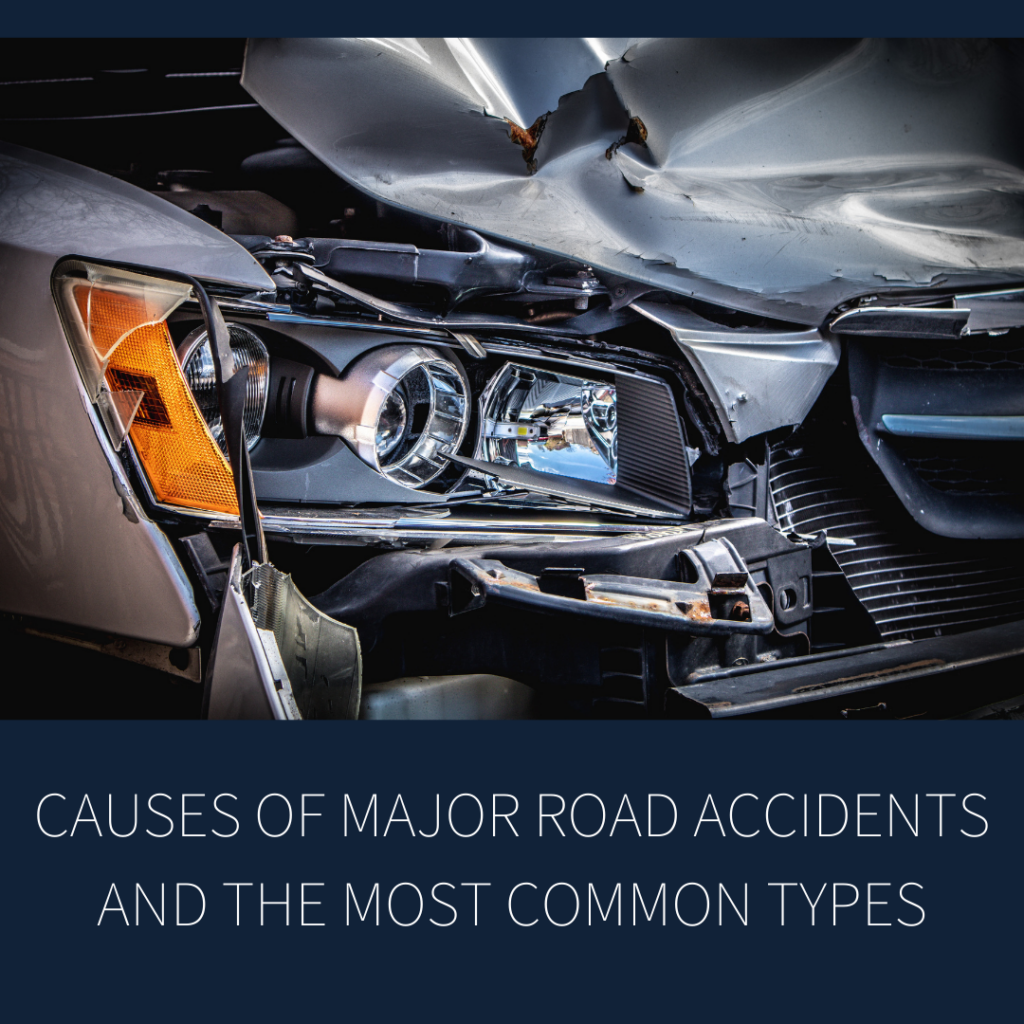
While technological advances such as the three-point seat belt and airbags have helped reduce vehicular safety issues, road accidents still regularly occur, negatively impacting many aspects of modern society. Taking the lives of approximately 1.35 million people per year and injuring another 20-50 million across the world, road accidents cause significant physical, emotional, and financial distress.[1] According to the World Health Organization, most nations even lose approximately 3% of their gross domestic product (GDP) due to traffic crashes, as individuals must take off time to recover and tend to injured family or otherwise lower their economic contributions.[2] Common demographic risk factors for accident exposure include age, gender, and socioeconomic status, with young adults, men, and members of lower-income households having a greater likelihood of road crashes.[3]

Common Causes of Road Accidents
Vehicular collisions can permanently alter and ruin lives, so it is of the utmost importance that drivers do everything in their power to avoid causing road accidents. Many preventative safety measures can be put into place to ensure one maintains low risk while driving. Understanding the common causes of road accidents can play an important role in averting disaster. In 2019, the top causes for road accidents in Texas were speeding, distracted driving, failure to yield, unsafe lane changes, failure to stay in one’s lane, disregarding signs or lights, driving under the influence of drugs or alcohol, and following too closely, respectively.
Failure to Obey Speed Limits, Traffic Signs, and Signals
The U.S. Department of Transportation found in their 2015 survey of free-flow vehicles that roughly 65.5% of observed drivers exceeded speed limits on limited access, two major arterial, and three major arterial roads, with approximately 41.2% driving more than 5 mph over the limit and 19.4% driving more than 10 mph over the limit.[4] Lessening the driver’s available reaction time in case of road hazards or other unexpected incidents and increasing the force of impact, speeding greatly increases the risk of collision, injury, and death. Speeding vehicles have greater difficulty coming to a controlled stop or maintaining vehicular control during inclement weather.
Oftentimes connected to distracted driving, failure to follow road signs and traffic lights can also result in collisions, and carelessly rolling through intersections can be one of the riskiest accident-causing mistakes of all. Ignoring traffic signs can sometimes be attributed to falsely assuming others’ actions, aggressive driving, or many other forms of disregarding traffic signs.
Distracted Driving and Driver Inattention
Distracted driving and inattention are extremely common and can be observed in many forms. Perhaps most familiar to U.S. drivers, texting and other forms of cell phone use while driving can divert attention away from the road. The driver’s focus shifts towards the secondary task instead of driving. Accidents and injuries may arise from failure to ignore cognitive, visual, or motor distractions.[5] Aside from cellular use, common examples of distractions include:
- visual distractions like rubbernecking, or paying attention to car crashes or other outside distractions that cause the driver to turn their head away from the road
- auditory distractions like loud music or passengers
- motor distractions such as eating or putting on makeup
- situational distractions like sun-glare or high beams
- cognitive distractions like daydreaming, mental preoccupations, or emotional distress.
Many of these issues revolve around drivers believing that they can successfully multitask while operating their motor vehicles.
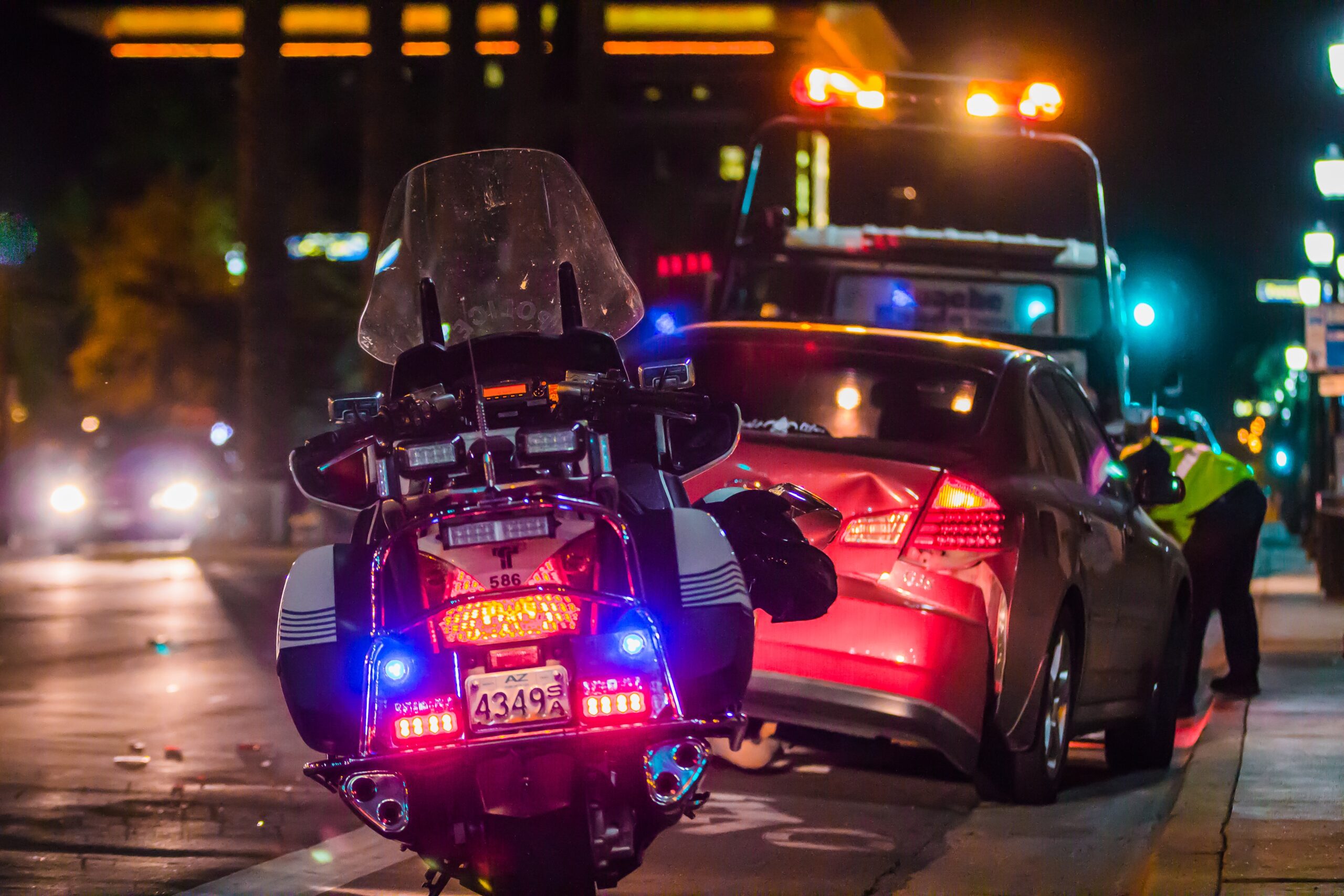
Another common form of inattention involves driving while excessively fatigued or drowsy. In some cases, drowsy driving can even be as dangerous as drunk driving. According to the CDC, staying awake for more than 24 hours straight is roughly equivalent to a blood alcohol content of .10 percent – a BAC .02 higher than the legal limit.[6] Drowsiness likely goes underreported due to its general category of inattention. Some drivers experience what is known as micro-sleeping, or dosing off for one or two seconds, in which time any sort of road accident could occur.
Driving Under the Influence
Alcohol and drug-impaired driving may occur for a variety of reasons, ranging from blatant disregard to believing that one is sober enough to drive. Driving under the influence worsens reaction time; visual, cognitive, and motor abilities; and judgment or risk-assessment skills. Dulling one’s senses, drivers fail to appropriately respond to stimuli, reckless causing accidents and injuries that could have been prevented through the use of ride-sharing, public transportation, or taxi services.
Most Common Types of Road Accidents
As estimated by the National Safety Council (NSC), the most common road accidents in the United States involve crashes between two or more motor vehicles (71.6% of crashes in 2018), followed by motor vehicle (MOVH) crashes with fixed or other objects (20.0%), animal or animal-drawn vehicles (4.7%), non-collisions / rollovers (1.9%), pedestrians (1.1%), pedalcycles (0.7%), and railroad trains (<0.1%).[7] Of all MOVH-on-MOVH accidents, the most frequent crash types respectively are rear-end, angle, sideswipe, and head-on collisions. In addition to these, single-vehicle accidents also present serious dangers, with a great variety in causes and types, ranging from weather-related complications to mere inexperience with driving.
Rear-End Collisions
The NSC estimates rear-end collisions to be approximately 45.8% of all multi-MOVH accidents in 2018.[8] These accidents happen when one vehicle strikes the bumper of the vehicle in front of them. This can occur when one car follows another too closely, a.k.a. tailgating, or when the front car comes to a sudden stop. Courts and officers often find the rear vehicle responsible, though the fault may be attributed to either driver involved based on the situation at hand and whether or not someone acted negligently.[9]
Angle Collisions
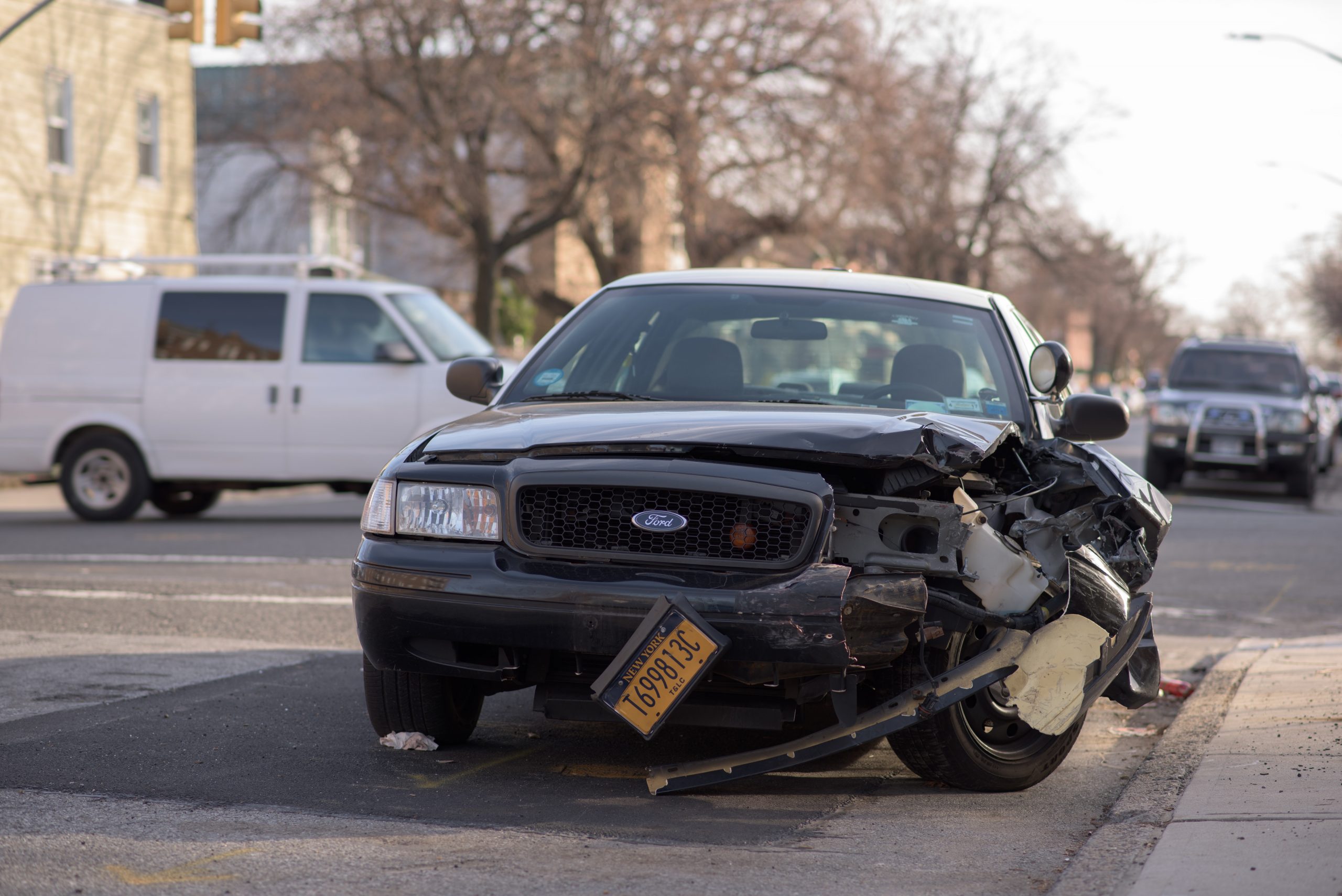
Angle collisions represent approximately 30% of all crashes each year and by far the most fatal crashes.[10] These crashes involve angled side-impact collisions. A common example of this sort of collision is the T-bone accident when the front of one MOVH strikes the side of another MOVH to create a right-angled T shape at the impact point. Areas of high risk for these accidents include intersections, neighborhoods, and highways. Though not as common as rear-end accidents, side-impact collisions present a significant danger. The side of a motor vehicle cannot absorb as much of the crash as other areas of the vehicle, which creates an additional risk of injury to the driver or passengers. Drivers often cause these accidents by running traffic signs or signals, failing to look both ways before turning, and switching lanes without caution.
Sideswipe Collisions
Sideswiping occurs when two vehicles traveling in the same direction collide on their side. This type of accident often is due to failure to merge or change lanes safely, such as neglecting to check vehicle blind spots. These accidents represent approximately 20% of all crashes.[11] While still extremely dangerous, especially when occurring at highway speeds, sideswipe collisions tend to only cause a relatively small percentage of fatal crashes each year.
Head-on Collisions
While head-on collisions only account for approximately 3.5% of all multi-vehicle crashes, the NSC estimates that these accidents were responsible for a disturbing 27.8% of all multi-vehicle fatal crashes in 2018.[12] In such accidents, two vehicles traveling in opposite directions collide on their front ends. At high speeds, safety features are intended to protect vehicle occupants; however, they often cannot absorb enough of the impact to prevent injury. Common causes of head-on collisions include wrong-way driving, distracted driving, and driving under the influence.
Any type of road accident can cause serious injury and significant long-term complications. It is important to always remain alert while driving and use extreme caution on the road. Drivers can protect themselves by avoiding distractions, such as by using cell phone features that limit notifications while driving, and being aware of potential hazards. However, should an accident arise, drivers should seek immediate assistance from first responders, and consult a legal representation for additional guidance.
Written by:
Jenna Donatiello
Law Clerk
WATTS GUERRA LLP
Four Dominion Drive, Bldg. Three, Suite 100
San Antonio, Texas 78257
Phone: (210) 447-0500
Frank Guerra
Board Certified – Personal Injury Law
Texas Board of Legal Specialization
WATTS GUERRA LLP
Four Dominion Drive, Bldg. Three, Suite 100
San Antonio, Texas 78257
Phone: (210) 447-0500
Be sure to follow us on Instagram and Facebook to see more Watts Guerra news!